
Dr T V Somanathan is the first finance secretary to be appointed Cabinet secretary since 1985. His appointment at this juncture seems to carry much meaning for the forthcoming trajectory of reforms and restructuring of India's steel frame.

Suggests cheque-only transaction for transaction beyond certain threshold.

A day after the Reserve Bank of India's (RBI's) Monetary Policy Committee hiked the policy repo rate by 50 basis points (bps), several commercial banks, including ICICI Bank and Bank of Baroda, raised their external benchmark-linked loan rates by an equal amount on Thursday. HDFC, the country's largest mortgage lender, too, increased its interest rates on housing loans by another 50 bps. In total, it has raised rates by 85 bps since May 4, when the RBI had increased the repo rate by 40 bps in an off-cycle meeting.

As the policy rate has seen a steady increase since May 2022, the percentage of loans offered at interest rates below 8 per cent have declined sharply, dropping from 53 per cent in March 2022 to 18 per cent by June 2023, according to a report by the Reserve Bank of India (RBI). The share of bank loans with interest rates of 10 per cent or higher rose from 22 per cent to 34 per cent during this period, reflecting the impact of a 250 basis point (bps) hike in the policy repo rate by the RBI's Monetary Policy Committee. In response to the rise in repo rate, 32 domestic banks have made corresponding upward revisions to their repo-linked external benchmark-based lending rates (EBLRs), aligning them with the magnitude of the rate hike.
Outlining the role of chairmen and chief executive officers in the fraud risk management system, the RBI further stated that the audit committee and special committee of the board should also own responsibility for systemic failure of controls or any absence of key controls or severe weaknesses in existing controls which facilitate exceptionally large-value frauds.

The senior IPS officer said that 45 percent of cyber financial frauds taking place in the country are originating from the South East Asia.

It was a protest which held a mirror to the government of a state taking pride in its commitment to democracy, gender equality and social indices.One person, who in his employed days had known governments and political parties at close quarters, told me that public perception of how the Kerala government handled the ASHA workers' strike had been terrible, reports Shyam G Menon.


Faced with a rising number of customer complaints on excessive charges, the Reserve Bank of India has asked the Indian Banks' Association to come up with guidelines on what the reasonable charges should be.
For five consecutive policy reviews in 2023, the Reserve Bank of India (RBI) chose to hold rates, citing inflation threat. And when the prices did cool off a bit, it reminded all about the target to get the headline consumer price inflation at 4 per cent and the risks from food inflation. Heading into the new year, all eyes are on when RBI will cut the rates, especially after one of the Monetary Policy Committee (MPC) members stressed on the need for such an action in the face of the US Federal Reserve's guidance for easing rates.

Retail inflation rose to three-month high of 4.81 per cent in June, mainly on account of hardening prices of food, according to the government data. Inflation based on the Consumer Price Index (CPI) stood at 4.31 per per (revised upward from 4.25 per cent) in May and 7 per cent in June 2022. The inflation, however, remains within the RBI's comfort level of below 6 per cent.

'One of the aspects for transparency and fair governance is to give the industry being represented the chance of lobbying with the regulator.'

Banks have raised concerns over the new international trade settlement in rupee, fearing that facilitation of such a mechanism could result in them facing the ire of economic sanctions by the West, people aware of the matter said. Large banks with overseas operations have sought clarity and assurance from the Reserve Bank of India (RBI) that they will not be targeted with sanctions for facilitating rupee trade with a sanction-hit country such as Russia. The present payment mechanism is a shift from earlier such arrangements, like the one with sanction-hit Iran, which involved banks facilitating settlement of international trade that did not have business in the sanctioned nation.
The committee on financial inclusion, headed by C Rangarajan, the chairman of Prime Minister's Economic Advisory Council, has recommended that the profits transferred to their reserves by such banks should be exempted from tax till the banks achieve the standard capital adequacy ratio (CAR).

He argued that if inflation is low, stable and moving towards the 4 per cent target, why has the RBI not revised downward the bank rate fixed in June 2023?

Rajan was expected to join the search committee to appoint three external members of a new six-member RBI Monetary Policy Committee

The Reserve Bank of India (RBI) on Friday hiked repo rate by 50 basis points to 5.90 per cent in order to control the rising inflation, keeping in line with the aggressive policies of central banks and the volatile markets prevalent across economies. RBI Governor Shaktikanta Das announced the rate hike today. In the meeting of the Monetary Policy Committee (MPC) that started on Wednesday, five of the members of the MPC voted to hike the key lending rate, repo rate, by 50-basis points (bps).

The Reserve Bank of India (RBI) on Monday fixed the tenure of MD, CEO and whole-time director (WTD) in a private sector bank at 15 years and prescribed the maximum age of 70 years for such functionaries. These directives form part of the instructions issued by the RBI with regard to the chair and meetings of the board, composition of certain committees of the board, age, tenure and remuneration of directors, and appointment of the WTDs on Monday. The RBI said it would come out with a Master Direction on Corporate Governance in banks in due course.
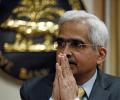
The government has extended the term of Reserve Bank of India Governor Shaktikanta Das by another three years upto December 2024, according to an official order.

Fintech companies believe that the impact of Reserve Bank of India's order last week on unsecured loans will be visible in six to 12 months and prompt them to diversify and strengthen their secured portfolio. Fintechs which source funds through banks or non-banking finance companies (NBFCs) are looking at quickly building their secured portfolio options to at least 40 per cent of their total portfolio. "Over the medium to long term, as part of our product strategy, we are evaluating secured products which can be enabled over a digital platform" said Yogi Sadana, the founder of Zype, a lending-focussed fintech.
In a move that is likely to attract political controversy, the committee on financial sector assessment has recommended that the banking sector should be gradually opened to foreign players and that the government lower its shareholding in public sector banks below 51 per cent and allow state-owned players to merge if the Centre's stake cannot go below the prescribed lower limit.
Foreign banks operating in India want the Reserve Bank of India to prepare a vision document on policy changes they can expect after March 2009.

A media report in the run up to the board meet had mentioned the names of Sashidhar Jagdishan, Kaizad Bharucha and Sunil Garg as the ones who had made the cut. Jagdishan and Bharucha are internal candidates, while Garg is working with American banking major Citigroup.

The use of RBI capital to strengthen public sector banks will have many positive implications for the economy -- and a few manageable downsides, points out R Jagannathan.

"I would like to resign as an independent director of the bank with effect from January 27, 2020. Given an entity owned and controlled by me has made an application to the RBI for a universal banking license, I felt it was -- in the interest of propriety and corporate governance -- only appropriate that I stepped down from this role," Bansal said in his resignation letter, which was disclosed by Ujjivan SFB in the regulatory filing.

Tomato prices have been on the boil for more than a month. Data from major cities show that the spike has been between 125 and 150 per cent at the wholesale level. Soaring vegetable prices, including tomatoes, pushed the retail inflation rate to a nine-month high of 5.49 per cent in September, according to government data. Though reports say prices are expected to come down in the next few weeks after supplies improve from Madhya Pradesh and Himachal Pradesh, how long will the respite last is anybody's guess.

In order to provide an impetus to digital funds movement, it has been decided to do away with the charges levied by the RBI for transactions processed in the RTGS and NEFT systems, RBI said.
New norms to keep Raghuram Rajan out of the race.

The Reserve Bank of India (RBI) will maintain the policy repo rate at 6.5 per cent during its upcoming June 8 announcement, considering the easing of retail inflation in April and the potential for further decline, indicating the effectiveness of previous policy rate actions, anticipate experts. Headed by Reserve Bank Governor Shaktikanta Das, a meeting of the six-member Monetary Policy Committee (MPC) is scheduled for June 6-8. The decision of the 43rd meeting of the MPC would be announced on Thursday, June 8.
The central bank has advised banks and financial institutions to 'seriously and promptly consider initiating criminal action against willful defaulters, wherever necessary, based on facts and circumstances of each case."
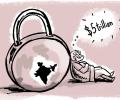
India decisively withstood global headwinds in 2023 and is likely to remain as the world's fastest-growing major economy on the back of growing demand, moderate inflation, stable interest rate regime and robust foreign exchange reserves. Despite widespread pessimism witnessed among the developed nations and the worsening geopolitical situation, India recorded a gross domestic product (GDP) expansion of 6.1 per cent in the March quarter. The growth moved up to 7.8 per cent in the June quarter and was 7.6 per cent in the September quarter. For the first six months of this fiscal, the growth was 7.7 per cent.
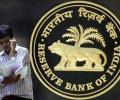
The Reserve Bank on Wednesday hiked key benchmark policy rate by 25 basis points to 6.5 per cent, citing sticky core inflation.

Former RBI governors Urjit Patel and Raghuram Rajan have also expressed worry about the Mudra scheme, particularly government's target-setting practice and the rising bad loans.

The 26 sectors specified by the RBI include automobiles, power, tourism, cement, chemicals, gems and jewellery, logistic, mining, manufacturing, real estate, and shipping among others.
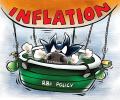
The Reserve Bank of India on Friday raised the retail inflation target for the current financial year to 5.7 per cent on the back of rising global prices amidst the ongoing geo-political tensions, even as it expected the prices of cereals and pulses to soften on prospects of good winter crop harvest. "Global food prices along with metal prices have hardened significantly. "Economy is grappling with a sharp rise in inflation... Inflation is now projected at 5.7 per cent in 2022-23 with Q1 at 6.3 per cent; Q2 at 5 per cent; Q3 at 5.4 per cent and Q4 at 5.1 per cent," RBI Governor Shaktikanta Das said while unveiling the first monetary policy review for the current fiscal year.
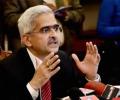
Heightened geopolitical uncertainties will lead the Reserve Bank's rate-setting panel to opt for a status quo at the next week's meeting, Axis Bank's chief economist Saugata Bhattacharya said on Monday. Bhattacharya said he had earlier expected a tightening action at the policy meet scheduled for April 6-8 but the increased uncertainties on the geopolitical front due to the Russian invasion of Ukraine and its impact on commodity prices makes him now think that RBI will defer such an action. He said the central bank's Monetary Policy Committee (MPC) may hike rates in the second half of FY23 by up to 0.50 per cent.

Mahapatra committee observes extraordinary rise in restructured assets With debt recasts rising substantially over the past two years and a major part of such loans threatening to slip to the non-performing category, Indian banks' credibility will be at stake in case of a latter scenario, the Reserve Bank of India said on Thursday.

Moody's Investors Service on Friday raised India's growth projection for 2023 calendar year to 6.7 per cent on account of robust economic momentum. "Strong services expansion and capital expenditures propelled India's 7.8 per cent real GDP growth in the second (April-June) quarter from a year ago. "We have accordingly raised our 2023 calendar year growth forecast for India from 5.5 per cent to 6.7 per cent," Moody's said in its Global Macro Outlook. - el nino
 © 2026 Rediff.com - Advertise with us - Disclaimer - Privacy Policy - Sitemap - Feedback - About us - Terms of use - Grievances